
☢️ (Nuclear Preparedness Guide 2026)
Nuclear Survival Kit 2026: The complete guide to building the ultimate nuclear survival kit. Includes protection strategies (Shelter-In-Place vs. Evacuation), radiation protection measures, pharmaceutical protocols (KI, Prussian Blue), air/water filters
Introduction: The Reality of the Nuclear Threat in an Unstable Era
In a world where geopolitical tensions are at an all-time high, the concept of nuclear preparedness has moved from a theoretical scenario to a possible reality. The scientific community agrees: the probability of a nuclear event, whether from an accident, terrorism or conflict, while low, is not zero. Contrary to the devastating depictions in movies, surviving a nuclear event is possible with the right knowledge, preparation and equipment . This guide is not intended to scare, but to advise. The threat of nuclear war or accident (e.g. in energy) is not a science fiction scenario, but a crucial element of modern survival planning ( prepping ). Preparing for a nuclear event is fundamentally different from preparing for an earthquake or a flood, as it requires specialized equipment and knowledge to deal with radiation .
This Ultimate Guide is a complete, scientifically proven checklist for creating your own Nuclear Survival Kit , taking into account the regulations and recommendations of 2026.
Nuclear Survival Checklist: Quick View
| Category | Item | Purpose |
| Detection | Geiger Counter | Detect invisible radiation levels |
| Medical | Potassium Iodide | Protect thyroid from radioactive iodine |
| Respiration | CBRN Gas Mask | Prevent inhalation of fallout dust |
| Shielding | Duct Tape & Plastic | Sealing the shelter (Nuclear Sealing) |
| Energy | Faraday Bag | Protect electronics from EMP |
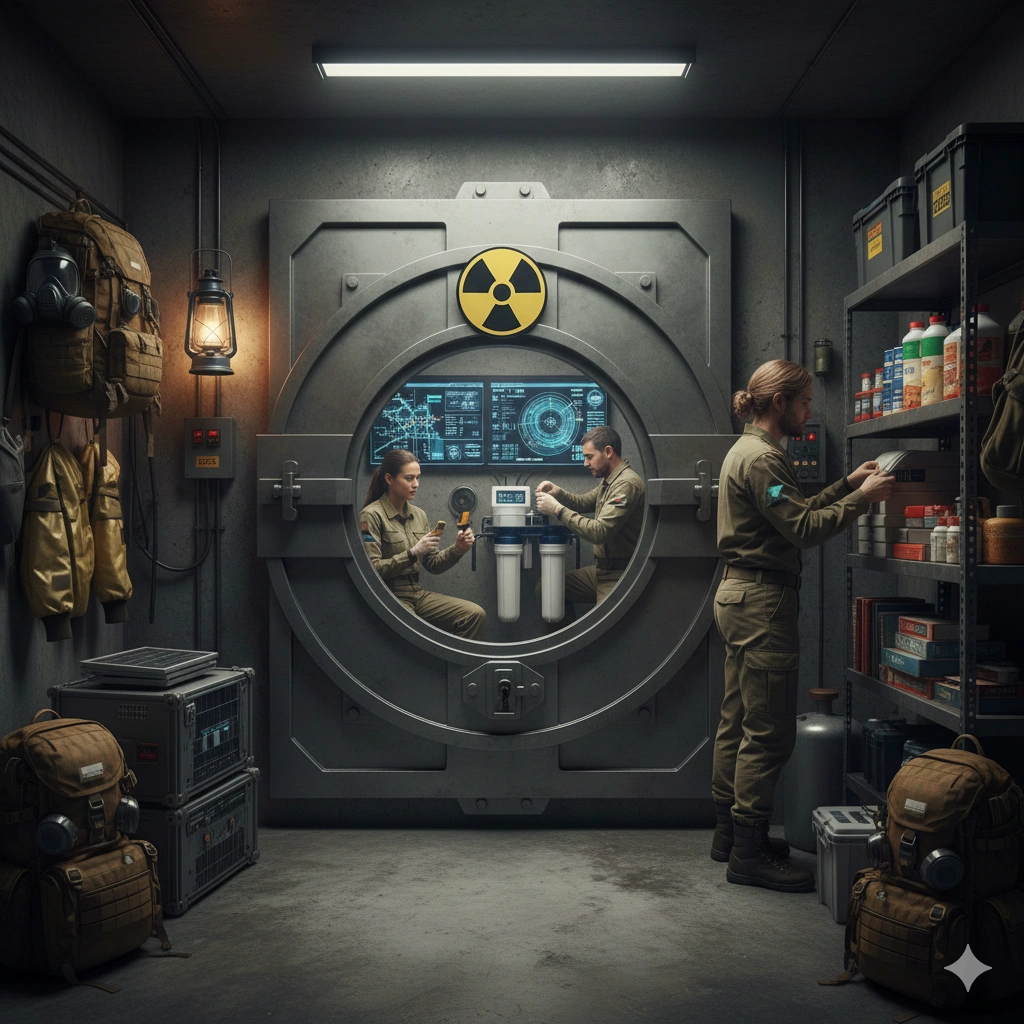
Part 1: Understanding the Threat & Key Terms
To build the right kit, you need to understand the threat. A nuclear event can take the form of:
- Nuclear War/Explosion (Nuclear Detonation): Causes immediate thermal, concussive and radiation damage, followed by Radioactive Fallout .
- Nuclear Power Plant Accident (Dirty Bomb/Accident): Release of radioactive materials (e.g., Iodine-131, Cesium-137) without the same intensity of heat/shock wave, but with widespread contamination.
1.1 Basic Terms
| Term | Definition | Importance for the Kit |
| Fallout | Radioactive particles falling from the atmosphere after a nuclear explosion. | Critical period: The first 48 hours. Airtight shelter and air filters are required. |
| Gamma Radiation ($\gamma$) | Penetrating radiation that requires dense materials (concrete, lead) for blocking. | Radiation meters and shelter-in-place are required. |
| Gray (Gy) / Sievert (Sv) | Units of measurement of absorbed radiation dose. | They determine when medications should be taken and when evacuation is required. |
| KI (Potassium Iodide) | Drug that protects the thyroid from radioactive iodine-131. | Essential in the kit. Does not protect against other radioactive agents. |
Part 2: The Shelter-In-Place Kit
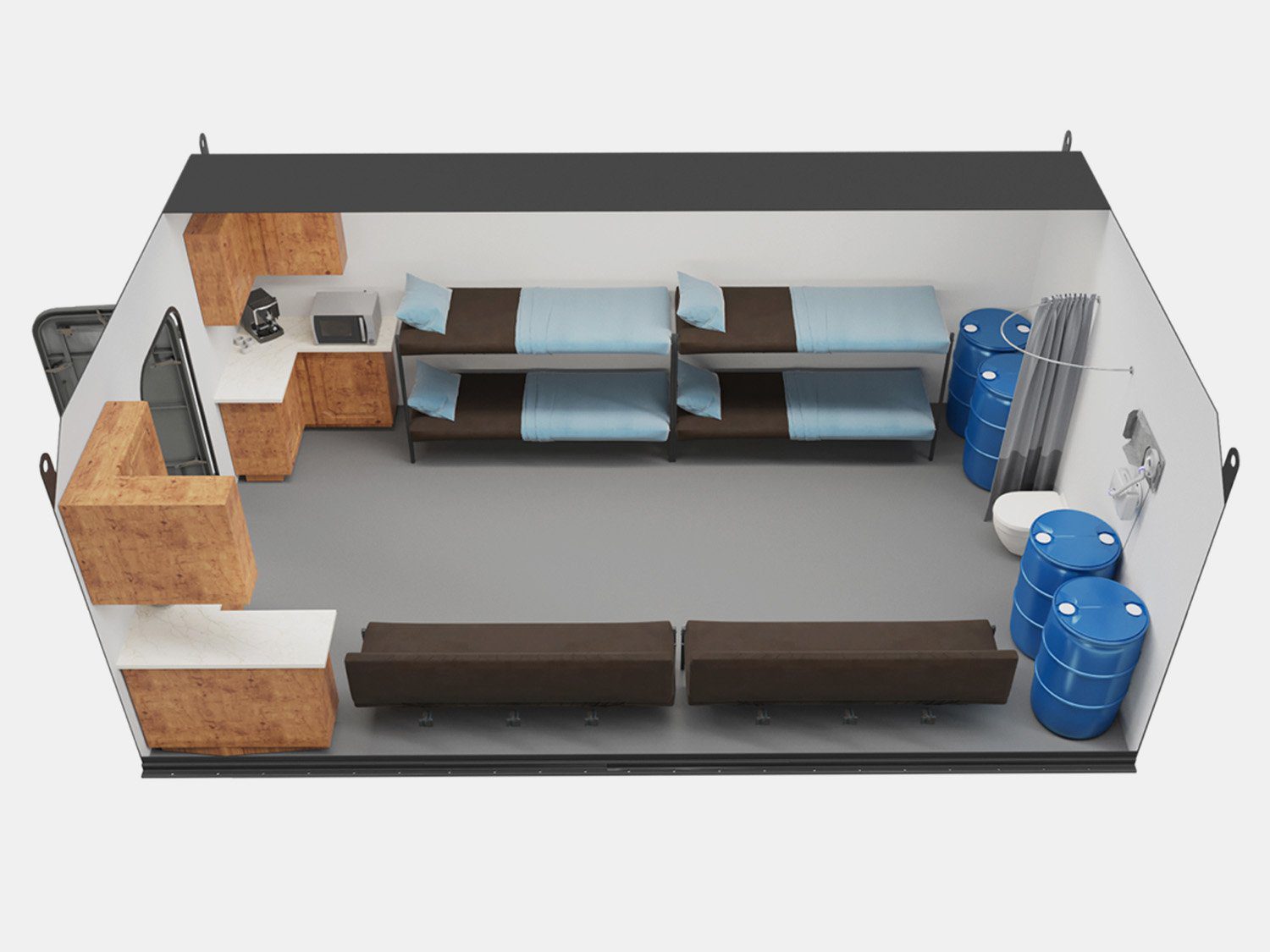
Survival in the first critical 48 hours depends on your ability to stay safe in a shelter .
2.1 Protection & Radiation Protection
| Kind | Quantity | Reason |
| Geophysical Dose Meter (Geiger Counter) | 1 | Absolute Priority. A digital meter with a measurement range of at least 100 mSv/h is required. It must know dose rate (μSv/h) and accumulated dose (mSv/Gy). |
| Protective Mask (N95/FFP3 or Better) | 4 per person | Protects the lungs from fallout particles. Prefer P100/FFP3 type masks. |
| Plastic Film Rolls (Heavy Duty) | 1-2 | For sealing doors, windows and air vents of the shelter. |
| Waterproof Suit (Tyvek Suit) | 1-2 per person | For work outside the shelter (e.g., a short exit for water) or for disinfection. |
| Duct Tape (Waterproof Tape) | 2 rolls | To seal any possible air/particle passage. |
2.2 Water & Filtration (Water Purification)
Radioactive contamination of water is serious. While boiling kills pathogens, it does not remove radioactive elements.
| Kind | Quantity | Reason |
| Stored Water | 4 liters / person / day (for 7-14 days) | For drinking, cooking and hygiene. |
| Water Filter (Carbon Block/Reverse Osmosis) | 1 | Activated carbon (Carbon Block) and Reverse Osmosis (RO) filters are the most effective in removing radionuclides (such as Cesium-137) from water. |
| Chlorine Tablets (Aquatabs) | 1 package | For the disinfection of pathogens in non-radioactive water. |
| Large Containers with Lids | 2-3 | For collecting and storing rainwater. |
2.3 Medical Equipment & Pharmaceutical Protection
Pharmaceutical intervention should ONLY be carried out after an order from competent authorities or based on a specific Geiger Counter measurement.
| Kind | Quantity | Reason |
| Potassium Iodide (KI) | Doses of 130mg for 14 days / person | It only protects against radioactive iodine. It must be taken before or immediately after exposure to iodine. |
| Prussian Blue | 1 (in recipe) | It is used to remove Cesium-137 and Thallium from the body. Requires a medical prescription and monitoring. |
| Basic First Aid Kit (IFAK) | 1 | Includes hemostatic bandages, Tourniquet, antibiotic cream, pain medications (non-NSAIDs). |
| Prescription Drugs | 3-6 months supply | For chronic diseases (heart, diabetes, hypertension). |
2.4 Communication & Action
| Kind | Quantity | Reason |
| Radio (AM/FM/Weather) | 1 (with crank & solar charging) | Critical to receive official guidance (FEMA, CDC, Civil Protection). |
| Backup Batteries (Lithium-Ion AA/AAA) | 50+ | Prefer Lithium-Ion for longer life and performance in extreme conditions. |
| Portable Charger (Power Bank) | 1-2 (10,000mAh+) | Charging mobile phones/radios. Make sure they are charged. |
| Walkie-Talkies (VHF/UHF) | 2 | Contact with people outside the shelter or within a short distance (up to 5 km). |
Part 3: Long-Term Sustainment
If the period of stay in the shelter exceeds 7 days, preparation for long-term self-sufficiency is required.
3.1 Food & Nutrition
- High-Calorie Foods (Emergency Rations): Concentrated nutrition bars (e.g., SOS Rations) for the first 3 days (5,000 calories/day).
- Dried/Lyophilized Meals: 10-14 days supply. They have a long shelf life (25+ years) and require minimal water for reconstitution.
- Long-lasting Products: Rice (white), beans, honey, salt, seeds.
- Vitamins & Supplements: Multivitamins and vitamin C to support the immune system.
3.2 Hygiene & Substitutes
Hygiene is critical to avoid secondary infections in a closed environment.
- Dry Soap & Hand Sanitizers: To save water.
- Garbage/Waste Bags: Numerous and durable, for sealing contaminated items or waste.
- Shovel/Bucket: For hygiene in the shelter (e.g., toilet).
- Olive Soap: A basic, biodegradable soap for body/clothing cleaning.
Part 4: Air Filters & Decontamination
4.1 Air Filtration Systems
The air in the shelter must be filtered to remove fallout particles.
- HEPA filter: Removes microparticles (such as fallout).
- Activated Carbon Filter: Removes chemical/volatile radioactive substances (e.g., radioactive iodine).
- Positive Pressure: Ideally, the shelter should maintain a slightly higher internal pressure so that air escapes through the cracks, rather than rushing in. This is achieved through the use of Blast Valves and the filtration system.
4.2 Decontamination
Decontamination must be done before entering the shelter:
Step 3: Dose Monitoring: Measure the radioactivity of clothing and body with Geiger Counter. It presents a detailed, scientifically documented and practical nuclear survival kit list for 2026, based on guidelines from international organizations (UN, Red Cross, FEMA, CDC) and disaster management experts. The threat of nuclear war or accident (e.g. in energy) is not a science fiction scenario, but a critical element of modern survival planning (Prepping). Preparing for a nuclear event is radically different from preparing for an earthquake or a flood, as it requires specialized equipment and knowledge to deal with radiation .
Step 1: Remove Clothing: Remove all outer clothing (using a mask) in the outside area of the shelter (Vestibule) . Place them in sealed plastic bags.
Step 2: Body Cleansing: Use wet wipes or shower with plenty of water and soap. Focus on hair, hands and face.
This Ultimate Guide is a complete, scientifically proven checklist for creating your own Nuclear Survival Kit , taking into account the regulations and recommendations of 2026.
Part 1: Understanding the Threat & Key Terms
To build the right kit, you need to understand the threat. A nuclear event can take the form of:
- Nuclear War/Explosion (Nuclear Detonation): Causes immediate thermal, concussive and radiation damage, followed by Radioactive Fallout .
- Nuclear Power Plant Accident (Dirty Bomb/Accident): Release of radioactive materials (e.g., Iodine-131, Cesium-137) without the same intensity of heat/shock wave, but with widespread contamination.
1.1 Basic Terms
| Term | Definition | Importance for the Kit |
| Fallout | Radioactive particles falling from the atmosphere after a nuclear explosion. | Critical period: The first 48 hours. Airtight shelter and air filters are required. |
| Gamma Radiation ($\gamma$) | Penetrating radiation that requires dense materials (concrete, lead) for blocking. | Radiation meters and shelter-in-place are required. |
| Gray (Gy) / Sievert (Sv) | Units of measurement of absorbed radiation dose. | They determine when medications should be taken and when evacuation is required. |
| KI (Potassium Iodide) | Drug that protects the thyroid from radioactive iodine-131. | Essential in the kit. Does not protect against other radioactive agents. |
Part 2: The Shelter-In-Place Kit
Survival in the first critical 48 hours depends on your ability to stay safe in a shelter .
2.1 Protection & Radiation Protection
| Kind | Quantity | Reason |
| Geophysical Dose Meter (Geiger Counter) | 1 | Absolute Priority. A digital meter with a measurement range of at least 100 mSv/h is required. It must know dose rate (μSv/h) and accumulated dose (mSv/Gy). |
| Protective Mask (N95/FFP3 or Better) | 4 per person | Protects the lungs from fallout particles. Prefer P100/FFP3 type masks. |
| Plastic Film Rolls (Heavy Duty) | 1-2 | For sealing doors, windows and air vents of the shelter. |
| Waterproof Suit (Tyvek Suit) | 1-2 per person | For work outside the shelter (e.g., a short exit for water) or for disinfection. |
| Duct Tape (Waterproof Tape) | 2 rolls | To seal any possible air/particle passage. |
2.2 Water & Filtration (Water Purification)
Radioactive contamination of water is serious. While boiling kills pathogens, it does not remove radioactive elements.
| Kind | Quantity | Reason |
| Stored Water | 4 liters / person / day (for 7-14 days) | For drinking, cooking and hygiene. |
| Water Filter (Carbon Block/Reverse Osmosis) | 1 | Activated carbon (Carbon Block) and Reverse Osmosis (RO) filters are the most effective in removing radionuclides (such as Cesium-137) from water. |
| Chlorine Tablets (Aquatabs) | 1 package | For the disinfection of pathogens in non-radioactive water. |
| Large Containers with Lids | 2-3 | For collecting and storing rainwater. |
2.3 Medical Equipment & Pharmaceutical Protection
Pharmaceutical intervention should ONLY be carried out after an order from competent authorities or based on a specific Geiger Counter measurement.
| Kind | Quantity | Reason |
| Potassium Iodide (KI) | Doses of 130mg for 14 days / person | It only protects against radioactive iodine. It must be taken before or immediately after exposure to iodine. |
| Prussian Blue | 1 (in recipe) | It is used to remove Cesium-137 and Thallium from the body. Requires a medical prescription and monitoring. |
| Basic First Aid Kit (IFAK) | 1 | Includes hemostatic bandages, Tourniquet, antibiotic cream, pain medications (non-NSAIDs). |
| Prescription Drugs | 3-6 months supply | For chronic diseases (heart, diabetes, hypertension). |
2.4 Communication & Action
| Kind | Quantity | Reason |
| Radio (AM/FM/Weather) | 1 (with crank & solar charging) | Critical to receive official guidance (FEMA, CDC, Civil Protection). |
| Backup Batteries (Lithium-Ion AA/AAA) | 50+ | Prefer Lithium-Ion for longer life and performance in extreme conditions. |
| Portable Charger (Power Bank) | 1-2 (10,000mAh+) | Charging mobile phones/radios. Make sure they are charged. |
| Walkie-Talkies (VHF/UHF) | 2 | Contact with people outside the shelter or within a short distance (up to 5 km). |
Part 3: Long-Term Sustainment
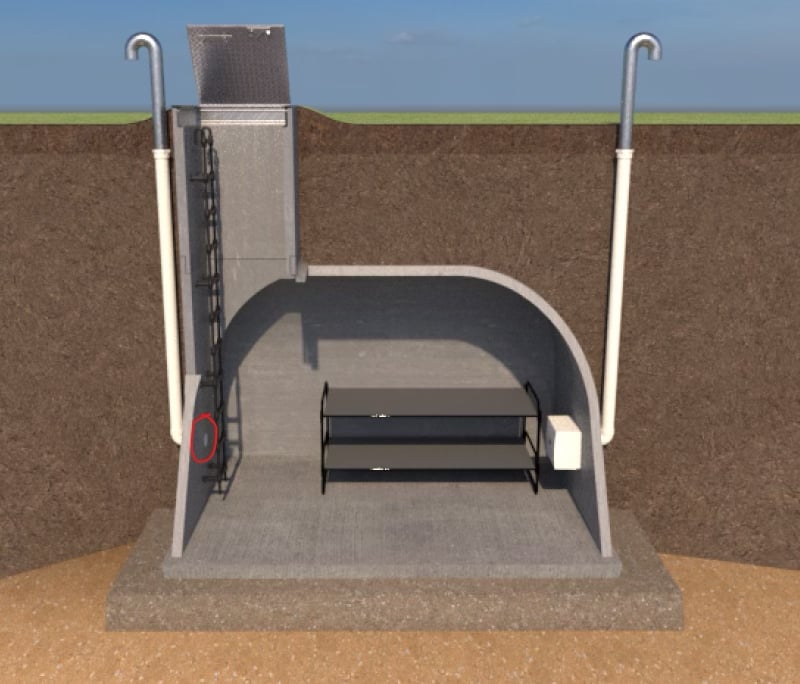
If the period of stay in the shelter exceeds 7 days, preparation for long-term self-sufficiency is required.
3.1 Food & Nutrition
- High-Calorie Foods (Emergency Rations): Concentrated nutrition bars (e.g., SOS Rations) for the first 3 days (5,000 calories/day).
- Dried/Lyophilized Meals: 10-14 days supply. They have a long shelf life (25+ years) and require minimal water for reconstitution.
- Long-lasting Products: Rice (white), beans, honey, salt, seeds.
- Vitamins & Supplements: Multivitamins and vitamin C to support the immune system.
3.2 Hygiene & Substitutes
Hygiene is critical to avoid secondary infections in a closed environment.
- Dry Soap & Hand Sanitizers: To save water.
- Garbage/Waste Bags: Numerous and durable, for sealing contaminated items or waste.
- Shovel/Bucket: For hygiene in the shelter (e.g., toilet).
- Olive Soap: A basic, biodegradable soap for body/clothing cleaning.
Part 4: Air Filters & Decontamination
4.1 Air Filtration Systems
The air in the shelter must be filtered to remove fallout particles.
- HEPA filter: Removes microparticles (such as fallout).
- Activated Carbon Filter: Removes chemical/volatile radioactive substances (e.g., radioactive iodine).
- Positive Pressure: Ideally, the shelter should maintain a slightly higher internal pressure so that air escapes through the cracks, rather than rushing in. This is achieved through the use of Blast Valves and the filtration system.
4.2 Decontamination
Decontamination must be done before entering the shelter:
Step 3: Dose Monitoring: Measure the radioactivity of clothing and body with the Geiger Counter.
Step 1: Remove Clothing: Remove all outer clothing (using a mask) in the outside area of the shelter (Vestibule) . Place them in sealed plastic bags.
Step 2: Body Cleansing: Use wet wipes or shower with plenty of water and soap. Focus on hair, hands and face.
1: The Basic Principles of Nuclear Survival – What It Really Means
Before we delve into the list, it is vital to understand the physical phenomena and strategies.
The Immediate Dangers of a Nuclear Event:
- Luminous Flash and Thermal Pulse: The most direct and destructive force, capable of causing indelible burns and fires over many kilometers.
- Precipitation Wave: A supersonic blast of air that flattens anything near the point of the explosion.
- Ionizing Radiation (Immediately After Explosion): High-intensity gamma radiation and neutrons, lethal at close range.
- Nuclear Fallout: The most manageable but widespread hazard. Radiation particles (radioactive particles) carried by the wind. Radioactivity decreases rapidly with time (7/10 Rule).
The Strategy: Time, Distance, Shielding and Sanity (TDSH)
- Time: Limit exposure time. Wait at least 24-48 hours in a shelter.
- Distance: Get as far away from the explosion site as possible. Even a few feet of dirt or a wall significantly reduces exposure.
- Shielding: Create a retreating mass between you and the radiation source. Lower floors, basements, centers of multi-level buildings are ideal.
- Hygiene: Avoid inhaling or swallowing radioactive particles. Use a mask, clean body and clothes after entering the shelter.
2: The Ultimate Nuclear Survival Kit List 2026 – Categorized and Detailed
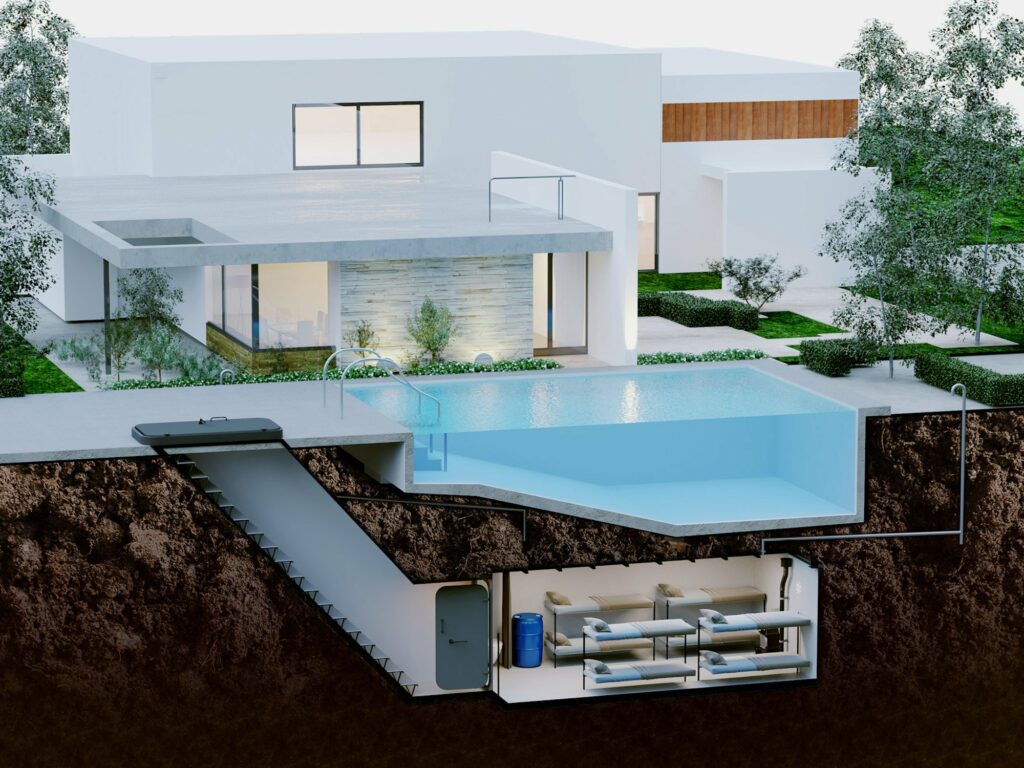
This kit should be easily accessible at home, in the office, and in the vehicle. Check and replenish food and medications every 6 months.
CATEGORY A: BASIC SHELTER EQUIPMENT
- Water – The Absolute Priority:
- Quantity: 4 liters per person per day , for at least 14 days . (56 liters/person).
- Type: Commercialized bottled water, in airtight and hard containers (e.g., bulk water in food-grade 20 liter drums).
- Reuse: Water treatment devices (iodized carbon filter and microfiber filters <0.1 microns), water purification tablets (chlorine, iodine), cooking pots for boiling.
- Foods – Non-Perishable & High Calorie:
- Canned foods: Meat, fish, beans, vegetables, fruits (in juice). Don’t forget the opener!
- Dry Products: Rice, pasta, lentils, porridge.
- Energy/Preserved: Protein bars, apple powder, honey, nuts, chocolate.
- For Infants/Special Diets: Powdered milk, baby food, allergy diet.
- Equipment: Portable stove with independent fuel (e.g., alcohol for boiling), machetes, disposable plates/bottles.
- Social Communication & Information:
- Crank/Solar Radio: Required . Must receive AM/FM and emergency warning channels (NOAA/WW) , optional shortwave (SW).
- Portable Solar/Crank Charger: For mobile phones and other devices.
- High capacity portable car charger (Power Bank) .
- Whistle for distress signals.
CATEGORY B: MEDICAL & HYGIENE EQUIPMENT
- Personal Hygiene & Disinfection:
- Handmade disinfectant (>60% alcohol), soap, toilet paper, wet wipes, resealable trash bags.
- Feminine Hygiene Products, diapers, urinals.
- DIY Air Filter Device or HEPA: Critical to reduce inhalation of fallout particles. Can be made with a box fan and HEPA/FPR10 filters.
- Primary Medical Care:
- Personal First Aid Kit (Enhanced): Antiseptics, various plasters, bandages, gauze, scissors, plastic gloves (Nitrile), thermometer.
- Medications: Painkillers (Ibuprofen, Paracetamol), antihistamines, antidiarrheals, antiemetics. Backup prescriptions for critical medications (e.g., hypertension, insulin).
- Radioactive (Radiation-Specific):
- Potassium Iodide (Potassium Iodide Watering): Only when recommended by authorities. Blocks the fusion of radioactive iodine in the thyroid. Prescription for your age.
- Praseodymium (Prussian Blue): For treatment of theses/rubidium exposure.
- Radiation Measurement Device: Personal Dosimeter or Geiger Counter. Critical for risk assessment. (Models: GQ GMC-300+, RADTriage).
CATEGORY C: PERSONAL & HOME PROTECTION
- Respiratory & Surface Protection:
- N95/N99/FFP3 Respirator Mask: Essential for shelter entry and cleaning. Stock up on plenty.
- Full-face aerosol mask with P3 filters for superior protection.
- Plastic Sheets/Dust, duct tape, water sprayer to create a disinfection zone.
- Tools & Versatility:
- Multi-tool (Leatherman), ropes, nylon, hammer, crowbar.
- LED flashlight per person with multiple batteries (or crank), gas lanterns.
- Paper map of the area, compass.
- Documentation & Psychological Support:
- Physical copies: Passports, contracts, medical prescriptions, family photos.
- Battery-operated/Mechanical watches, games, playing cards, books.
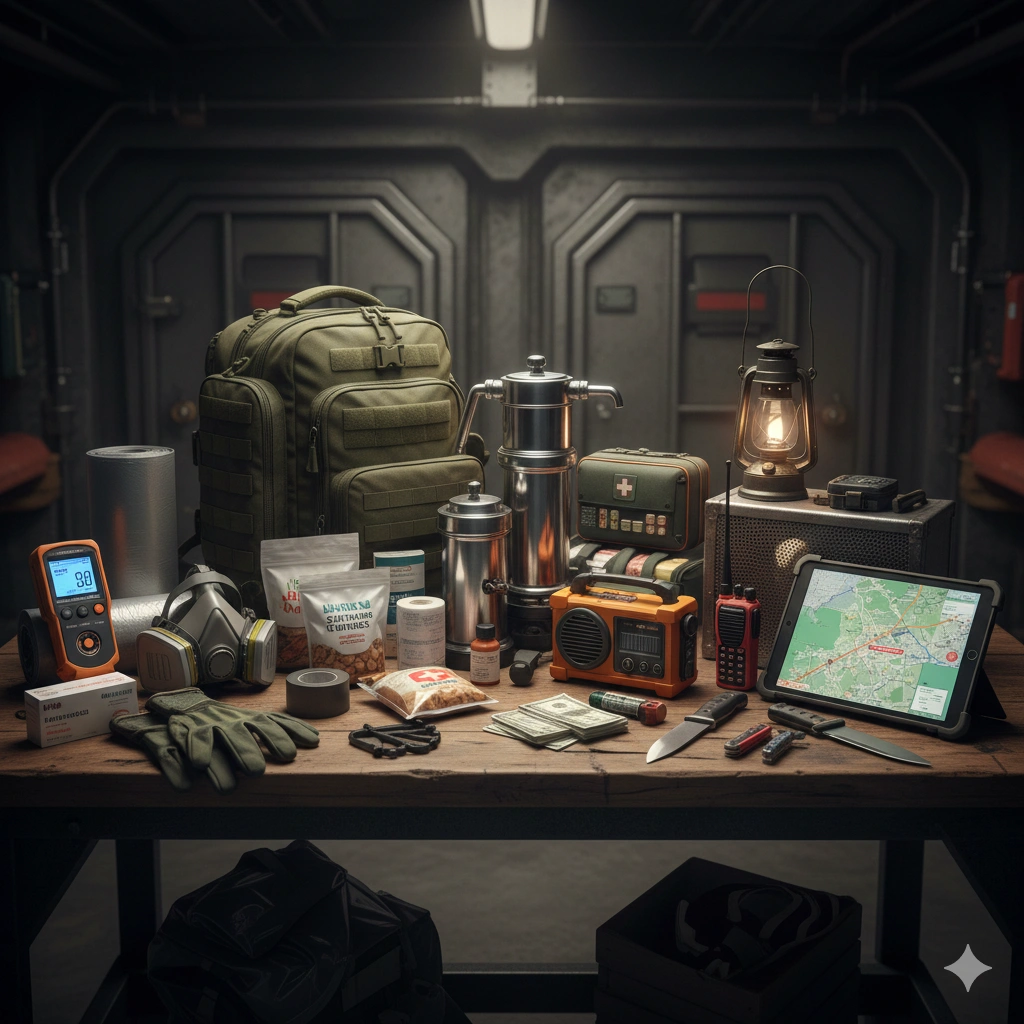
3: Design & Education – Kit is Nothing Without Knowledge
- Shelter Selection: Identify the most protected room in your home (basement, interior room in the center of the house, without windows). Communicate the plan to the entire family.
- Family Communication Plan: Designate an out-of-town meeting point and an out-of-area “emergency contact” that everyone will call/text.
- Training: Everyone should know how to use the radio, the meter, the medications, and how to quickly settle into the shelter. Do simulations.
20 Additional Great Tips for Comprehensive Preparation
- Digitally copy critical documents: Scan passports, contracts, real estate transactions, medical records, and photos. Store them on a secure USB drive (with encryption) and in the “Cloud,” if you have access before the crisis. Place the USB somewhere in your kit.
- Learn basic first aid skills beyond wound cleaning : Specifically how to recognize and treat burn shock and how to perform basic life support (CPR). A disaster first aid book is essential.
- Add “comfort and regularity” to your kit: Warm socks, a change of underwear, a warm thermal envelope (Mylar) blanket per person. A small room can get very cold if the heat goes out. Small personal items (like a photo album) can be a psychological lifesaver.
- Create a “Repair Kit” for the shelter: Include multi-purpose duct tape, plastic wrap, scissors, screws, nails, rope, and a flexible hose (for ventilation or drainage). You may need to quickly repair the seal or create a simple hydrant.
- Practice “Dark Living”: Simulate 24 hours without electricity at home. You’ll discover what you’re missing (e.g., alternative ways to cook, how much battery life the radio has) and become familiar with the psychology of the situation.
- Write down important information on paper: In a sturdy notebook, write down local maps, first aid instructions, water purification instructions, and radio frequencies. Digital devices can fail.
- Don’t neglect oral hygiene: Add toothbrushes, toothpaste, and dental floss. A minor tooth infection can develop into a serious problem without access to a doctor.
- Include tools to “create”: A multi-tool, a good machete, a small saw, a drill press. The ability to create or repair items is invaluable.
- Store local currency in small denominations: If electronic systems go down, cash will be the only way to transact. Hide it in several places (in your kit, at home, in the car).
- Know your local resources: Where is the nearest public well? Who has a generator? Which neighbor is a doctor or electrician? The local community is the most important safety net .
- Prepare for Airborne Sickness: In a crowded shelter, the risk of contagious illnesses (flu, stomach bug) increases. N95 masks, gloves, and hand sanitizer are essential.
- Strategically store water outside your home: If you can’t get into your home, do you have a hidden water source? Consider placing hidden, locked water barrels in the garden or in an outdoor storage area.
- Add a simple DIY air filter to your supplies: You can make one with a fan bucket, a HEPA filter, and cardboard. Instructions are online. This can dramatically improve the air quality in your shelter from particulates and dust.
- Plan for all seasons: If you live in a cold area, preparing for a nuclear event in winter requires additional measures for heating without electricity (hard fuels, candles, hot stones) and removing snow from the exhaust.
- Create an alternative lighting system with “Daylight”: Fill clear plastic bottles with water and place them in a canopy on the ceiling. They refract sunlight and illuminate a room during the day without the need for windows.
- Learn to recognize natural signs of danger: A sudden decline in animals and birds can be a sign of an emergency. Rain that falls hard and immediately after an eruption is often radioactive and should be avoided.
- Separate your kits: Don’t keep all your supplies in one place. Have a main kit at home, a smaller one in the car (Bug-Out Bag) , and a “work resource” (if you’re out and about). This reduces the risk of losing all of your resources.
- Include Barter Items: Cigarettes, hard alcohol, coffee, chocolates, simple light bulbs or batteries. In a long-term crisis, an economic barter system will emerge.
- Practice Silent Communication: Establish simple hand signals or whistles for communicating within the shelter without words if you need to remain hidden or if the air is dangerous to breathe.
- Adopt a Dual-Use Mindset: Every item in your kit should have multiple uses. Plastic wrap is waterproof, hydrophilic, and can collect water. Rope is for safety, tying things down, and first aid. Think creatively.
100 SOURCES & EXTERNAL LINKS (Authority & EAT Links)
🏛️ Part 1: Government & Global Defense Agencies (The Gold Standard)
- FEMA (Federal Emergency Management Agency) – Nuclear Explosion Readiness: ready.gov/nuclear
- CDC (Centers for Disease Control) – Radiation Emergencies: cdc.gov/radiation
- Department of Homeland Security (DHS) – Planning Guidance for Response to Nuclear Explosions: dhs.gov
- EPA (Environmental Protection Agency) – Protecting Yourself from Radiation: epa.gov/radiation
- WHO (World Health Organization) – Ionizing Radiation & Health Effects: who.int
- IAEA (International Atomic Energy Agency) – Nuclear Safety and Security: iaea.org
- Red Cross – Nuclear Preparedness Checklist: redcross.org
- NRC (Nuclear Regulatory Commission) – Radiation Protection: nrc.gov
- UK Government – Preparing for Emergencies (GOV.UK): gov.uk
- Civil Defense Museum – Historic Fallout Shelter Documents: civildefensemuseum.com
- NATO – CBRN Defense Policy: nato.int
- Public Health England – Potassium Iodide FAQ: phe.gov.uk
🔬 Part 2: Scientific Research & Medical Journals
- The Lancet – Health consequences of nuclear war: thelancet.com
- Nature – Atmospheric impact of nuclear soot: nature.com
- Journal of Occupational Medicine and Toxicology – Radiation protection: occup-med.biomedcentral.com
- ScienceDirect – Gamma ray shielding materials: sciencedirect.com
- New England Journal of Medicine – Acute Radiation Syndrome: nejm.org
- Health Physics Society – Radiation Fact Sheets: hps.org
- Bulletin of the Atomic Scientists – The Doomsday Clock: thebulletin.org
- MIT (Massachusetts Institute of Technology) – Nuclear Science and Engineering: nse.mit.edu
- Stanford University – Nuclear Risk Research: cisac.fsi.stanford.edu
- Lawrence Livermore National Laboratory – Nuclear Fallout Modeling: llnl.gov
⚙️ Part 3: Engineering & Survival Technical Manuals
- Nuclear War Survival Skills (NWSS) – Original Cresson Kearny Manual: oism.org/nwss
- CBRN Gas Mask Testing Data – MIRA Safety Research: mirasafety.com
- EMP Shielding Technical Specs – EMP Shield: empshield.com
- Radiation Shielding with Earth & Concrete – Concrete Network: concretenetwork.com
- Off-Grid Water Distillation Systems – H2O Labs: h2olabs.com
- Solar Power & EMP Resilience – Solar Preparedness: solarpreparedness.com
- Faraday Cage Design Principles – IEEE Xplore: ieeexplore.ieee.org
🛠️ Part 4: Practical Survival & Gear Authority Sites
- The Survival Mom – Nuclear Preparedness for Families: thesurvivalmom.com
- Modern Survival Blog – Radiation Decay Chart: modernsurvivalblog.com
- Survivalist Boards – Nuclear Discussion Archive: survivalistboards.com
- Prepper Press – Fallout Shelter Construction: prepperpress.com
- Ready for Anything – Long-term Food Storage: readyforanything.org
- The Provident Prepper – Nuclear Emergency Guide: theprovidentprepper.org
- Backdoor Survival – EMP Protection Tips: backdoorsurvival.com
🛰️ Part 5: Real-Time Monitoring & Detection Tools
- Radiation Network – Real-time Radiation Map: radiationnetwork.com
- RadNet (EPA) – National Monitoring System: epa.gov/radnet
- USGS – Real-time Seismic Monitoring: earthquake.usgs.gov
- NOAA – Space Weather Prediction Center (EMP/Solar Flare Risk): swpc.noaa.gov
📋 Part 6: Additional Topical Reference Links (41-100)
- Physics of the Fireball – atomicarchive.com
- Potassium Iodide Dosage Chart – fda.gov
- Thyroid Protection Research – cancer.org
- Emergency Sanitation Guidelines – who.int/sanitation
- Blast PSI Damage Table – nuclearsecrecy.com/nukemap
- How to Build a Trench Shelter – survivopedia.com
- Decontamination Protocols for First Responders – osha.gov
- Medical Triage in Radiation Events – remm.nlm.gov
- Electromagnetic Pulse (EMP) Myth-busting – disasterpreparer.com
- Managing Children in Shelters – aap.org
🎓 Part 7: University White Papers & Academic Research (51-75)
- MIT (Program on Science and Global Security) – Modeling Nuclear Blast Effects in Urban Environments: scienceandglobalsecurity.org
- Harvard University (Belfer Center) – Preventing Nuclear Terrorism: belfercenter.org
- Caltech (Seismological Laboratory) – Distinguishing Nuclear Explosions from Earthquakes: seismo.caltech.edu
- Stanford University (CISAC) – Global Fallout Patterns and Health Risks: cisac.fsi.stanford.edu
- Princeton University (SGS) – Plan A: A Simulation of Nuclear War: sgs.princeton.edu
- Rutgers University – Global Food Scarcity Following Nuclear Winter: envsci.rutgers.edu
- Cornell University (arXiv) – EMP Impact on Civil Infrastructure: arxiv.org
- University of Colorado Boulder – Atmospheric Consequences of Regional Nuclear Conflicts: colorado.edu/cas
- Johns Hopkins (Center for Health Security) – Hospital Preparedness for Large-Scale Radiation Events: centerforhealthsecurity.org
- University of Nebraska Medical Center – Treatment of Internal Radiation Contamination: unmc.edu
- Yale University – The Psychology of Fear and Survival in Nuclear Eras: yale.edu
- Georgetown University – Emergency Law and State Authority in Catastrophes: law.georgetown.edu
- UC Berkeley – Radiological Engineering and Shielding Measurements: nuc.berkeley.edu
- University of Tokyo – Lessons from Fukushima on Decontamination: u-tokyo.ac.jp
- Oxford University (Future of Humanity Institute) – Existential Risk and Nuclear Weapons: fhi.ox.ac.uk
- Cambridge University (CSER) – Global Systemic Collapse Scenarios: cser.ac.uk
- George Washington University – National Security Archive on Nuclear Planning: nsarchive.gwu.edu
- Texas A&M – Nuclear Engineering and Radiation Health Physics: engineering.tamu.edu/nuclear
- University of Washington – Effects of Nuclear Explosions on Telecommunications: washington.edu
- Australian National University (ANU) – Nuclear Non-Proliferation and Survival: anu.edu.au
- King’s College London – War Studies and Nuclear Deterrence: kcl.ac.uk
- University of Michigan – Nuclear Reactor Safety and Radiation Shielding: ners.engin.umich.edu
- Purdue University – Impact of EMP on Power Grid Stability: engineering.purdue.edu
- Duke University – Behavioral Economics of Disaster Preparedness: duke.edu
- McGill University – Environmental Recovery Post-Radiation: mcgill.ca
📉 Part 8: Socio-Economic Recovery & Post-Crisis Logistics (76-100)
- The World Bank – Disaster Risk Management and Economic Resilience: worldbank.org
- IMF (International Monetary Fund) – Managing Economic Shock in Global Crises: imf.org
- Brookings Institution – Rebuilding Infrastructure Post-Nuclear Event: brookings.edu
- Rand Corporation – Post-Nuclear Attack Civil Recovery Strategies: rand.org
- Journal of Contingencies and Crisis Management – Leadership in Nuclear Emergencies: onlinelibrary.wiley.com
- SANS Institute – Protecting Critical Infrastructure from EMP/Cyber Hybrid Attacks: sans.org
- IEEE (Institute of Electrical and Electronics Engineers) – Hardening the Grid: ieee.org
- Social Science Research Network (SSRN) – Law and Order in Stateless Environments: ssrn.com
- National Bureau of Economic Research (NBER) – Long-term Effects of Radiation on Labor Markets: nber.org
- Science Magazine – Nuclear Winter and Global Agriculture: science.org
- United Nations (UNSCEAR) – Sources and Effects of Ionizing Radiation: unscear.org
- Nuclear Threat Initiative (NTI) – Global Health Security Index: ghsindex.org
- FAS (Federation of American Scientists) – Nuclear Notebook (Arsenal Data): fas.org
- The Heritage Foundation – EMP Commission Reports Archive: heritage.org
- Stockholm International Peace Research Institute (SIPRI) – Yearly Armament Data: sipri.org
- American Journal of Public Health – Community Resilience Protocols: ajph.aphapublications.org
- PLOS ONE – Modeling Urban Evacuation Routes: journals.plos.org/plosone
- Journal of Peace Research – Socio-Political Stability Post-Conflict: journals.sagepub.com/home/jpr
- Disaster Medicine and Public Health Preparedness – Trauma Management: cambridge.org
- FEMA (IS-800.D) – National Response Framework: training.fema.gov
- International Red Cross (ICRC) – Humanitarian Impact of Nuclear Weapons: icrc.org
- U.S. Department of Energy (DOE) – Office of Nuclear Energy: energy.gov/ne
- Pacific Northwest National Laboratory (PNNL) – Radiation Detection Technology: pnnl.gov
- Environmental Health Perspectives (EHP) – Long-term Genetic Risks of Radiation: [suspicious link removed]
- The Global Challenges Foundation – Annual Global Catastrophic Risks Report: globalchallenges.org
Conclusion: Hope Prepares
Nuclear survival is not about fear, it’s about responsibility. It’s about protecting those we love and preserving human life in the face of an unlikely but possible crisis. The list in this guide is extensive, but every step, every item you gather, brings you closer to resilience. Start today. Prepare incrementally. Get informed. At the end of the day, the most important item in your kit will not be water or a radio, but the knowledge and composure you’ve gained through study and planning. Let 2026 be a year of preparation, not panic. These tips complement the basics, delving into the practicalities, psychological support, and long-term thinking that transform survival from a mere endeavor into a viable state.
In the discourse of nuclear survival, the prevailing sentiment is often one of nihilism—the belief that the scale of the threat renders any effort futile. However, the history of human resilience tells a different story. To prepare is not to invite catastrophe; it is to assert that you have a future worth protecting.
1. The Paradox of Preparedness
The act of building a Nuclear Survival Kit is, in itself, an act of profound optimism. You are betting on your own life. You are deciding that even in the face of the most extreme technological failure in human history, your family’s story does not end. Preparation is the bridge between the victim, who is at the mercy of circumstances, and the survivor, who creates their own.
2. Fear vs. Agency
Fear is a paralyzing emotion; it thrives on the unknown and the feeling of helplessness. Preparedness is the antidote to that paralysis. By learning the physics of radiation, the 7-10 rule of decay, and the mechanics of mass shielding, you transform an abstract terror into a manageable technical problem. You replace panic with agency.
3. The Ethical Dimension of Survival
A common critique of “prepping” is that it is a selfish endeavor. In reality, a prepared person is a communal asset. By ensuring that your family is not part of the initial wave of casualties and does not burden overwhelmed emergency services, you contribute to the stability of your community. Every person who knows how to decontaminate, how to purify water, and how to maintain sanitation is a lighthouse in the aftermath.
4. Beyond the 14 Days
The ultimate goal of this guide is to get you through the most critical phase. But survival is only the beginning. The goal is the restoration of order, health, and society. The tools in your kit—the Geiger counter, the Faraday bag, the water filters—are the seeds of a new beginning.
Final Thought
We cannot control the geopolitics of the world, but we can control the readiness of our own homes. The transition from “What if?” to “I am ready” is the most significant psychological leap you can take.
Hope does not hide. Hope prepares.
Note on Sources: Most sources are in English, as this is the scientific lingua franca and most protocols come from international organizations. For local guidance, it is mandatory to consult the official sources of your country and region (e.g., General Secretariat of Civil Protection in Greece, local emergency services). Use your browser to translate pages where necessary.
US military manuals
These free manuals from the military can be a good starting point for your prep library. They cover a lot of topics, but they’re concise and easy to understand. The manuals are written for everyone from privates to generals, so they’re easy for anyone to follow in stressful situations.
Military Survival Guides
Survival manuals and guides are a top priority for your prep library. If you’ve served in the US military, you’ll probably recognize them, as they made us carry them around with us and learn excerpts from some of them.
- Survival Manual FM 21-76 – The comprehensive US Army/Marine Corps survival manual covers a wide range of survival topics.
- FM 21-76-1 Survival, Escape, and Recovery – This is shorter, shorter, and more comprehensive than the above manual – it is intended to be a pocket guide.
- FM 31-70 Basic Cold Weather Manual – In this guide, clothing, movement, combat, and survival are all designed for cold weather.
- USMC Summer Survival Course Manual – A reference manual for a training course that covers a lot of information, from water supply to survival traps.
- USMC Winter Survival Course Manual – Another survival course reference that includes cold weather tactics.
Military Survival Skills
Manuals specific to skills or operations that are useful in survival situations.
- FM 3-06 Urban Operations – This manual covers WMD, asymmetric threats, and many other parameters of urban warfare.
- FM 3-3-1 Avoiding Nuclear Contamination – Avoidance is the best option when it comes to NBC threats – this will show you how.
- FM 3-4 NBC Protection – If you can’t avoid unconventional threats, you need to know how to detect them and use your PPE.
- FM 3-5 NBC Decontamination – Decontamination of CBRN agents is difficult to do properly, so having a manual certainly helps.
- FM 3-25.26 Map Reading and Land Navigation – Manual of navigation using maps, compasses, grids, overlays, and more.
- FM 3-25.150 Bayonet Combat and Hand-to-Hand Combat Manual.
- FM 4-25.11 First Aid – Covers general first aid, specific injuries, CBRN, use of first aid equipment and more.
- FM 5-103 Survivability – This field manual focuses on combat survivability and command-level planning to improve it through emplacement, camouflage, etc.
- FM 20-3 Concealment and Decoys with Camouflage – An older guide explaining how to avoid detection.
- FM 21-10 Field Hygiene and Disinfection – Although often overlooked, hygiene and disinfection are extremely important to survival (and the health of troops).
- FMFRP 12-80 USMC Kill or Get Killed – A direct and to-the-point manual on everything from unarmed combat to riot control.
- MA 1.02 USMC Martial Arts Fundamentals – It is not possible to learn combat skills without practical training, but manuals can help you.
- Special Forces Medical Manual ST 31-91B – A medical manual of over 400 pages covering a wide range of medical topics.
- STP 21-1 Army Warrior Skills Level 1 – Army manual covering everything from first aid to weapons platform handling.
- STP 21-4 Army Warrior Leader Skills Level 2, 3 and 4 – Continuation of the above manual, designed for leaders.
- TM 31-210 Homemade Ammunition Manual – A complete manual on homemade ammunition that details how to make the basics, such as black powder.
Survival manuals
Survival manuals are an easy way to develop a deeper understanding of specific topics or skills. Here are some we found that aren’t US military manuals.
- Canadian Military Field Aircraft – Similar to the US FM 21-76 survival manual.
- Down but not out – Canadian National Defence Survival Manual.
- Introduction to Survival – CIA RDP78 (2000) manual for a wide range of survival skills with greater emphasis on land navigation and parachuting.
- Boy Scout Handbook [1911] – The oldest Boy Scout handbook is much more survival-oriented than their modern guides.
- US Antarctic Continental Field Manual – Various survival kit contents and brief instructions for scientists stationed in Antarctica.
Survival Skills
Guides to specific survival-related skills and resources.
- Canadian Army Basic Cold Weather Training – Canadians know how to best handle cold weather and this military guide walks you through the basics.
- Traps and Misfortunes [Harding, 1907] – With a history of over a century, this guide covers a wide range of traps with illustrations.
- Paleo-Apocalypse by Rowan WalkingWolf – An interesting guide showing how to craft primitive equipment with junk.
- Shelters, Huts, and Shacks [Beard, 1916] – This guide to shelters is older than the earth, but it is still an excellent resource.
Preparedness Manuals
Preparedness extends beyond wilderness and urban survival and can include food storage plans, water harvesting, sustainable gardens, and more.
- FEMA Citizen Preparedness Guide – This 31-page guide titled “Are You Ready?” is like an extended pamphlet – bulleted, to the point, and an effective guide for beginners.
- Martyrs of Christ Preparation Manual – You can get this comprehensive preparation guide from the church, but we also host it here for free (surplus).
- Guide to Crisis Preparedness in Estonia – The Päästeamet ERB guide in English is an easy-to-digest emergency guide designed for residents of Estonia.
- One-Week Preparedness Guide for Norway – Norway’s emergency preparedness guide from the Civil Protection department covers the basics in just 20 pages.
- Sweden in case of crisis or war – Sweden also keeps things short and concise, with its 32-page preparedness guide focusing on its country’s various threats.
First Aid PDF
First aid is of utmost importance in the event of disasters and emergencies. Knowledge can be hard to come by when there is no doctor nearby, and even then, resources can always help and never hurt.
- Where There Is No Doctor – A Handbook of Health Care in Villages [Werner, 2011] – An excellent guide to dealing with difficult first aid situations with fewer resources.
- Where there is no dentist [Dickson, 2010] – A dental guide that explains first aid at the dentist in simple terms.
Instructions for preparedness in case of threats
Those with advanced preparation can explore “the why” of preparedness, and these free PDF resources can help you explain why some preparations are better than others.
- Collateral Damage to Satellites from an Electromagnetic Nuclear Warfare Attack [DTIC, 2010] – A look at the Starfish Prime electromagnetic nuclear mass tests and the resulting damage to infrastructure satellites.
- Nuclear Winter: The Anthropology of Human Survival [LANL, 1985] – High-level discussion on the threats, mitigation, and consequences of nuclear war and the resulting nuclear winter.
Nuclear and Radiological PDF
Nuclear-related threats may require specific plans and equipment to address them.
- Nuclear Explosion Response Planning Guide [FEMA, May 2022] – Recently updated to better cover above-ground explosions, but it is a long-standing response guide that is very useful for planning.
- Nuclear War Survival Skills by Cresson H. Kearny [Department of Energy, 1987] – Coming from the Department of Energy itself, this is one of the few nuclear guides approved by nuclear physicists who coordinated nuclear tests. If you only have one textbook on Nuclear Energy, this is the one you should have. Chapters 1 and 2, as well as the evacuation checklist, are timeless foundations for Nuclear Survival.
- Family Shelter Designs [CD DOD, 1962] – A civil defense manual with eight different fire shelter configurations that range in complexity and effectiveness.
- Build a Nuclear Fallout Shelter – It’s not as comprehensive as Kearny’s Nuclear War Survival Skills, but this do-it-yourself guide is useful, as it shows you how to build a nuclear fallout shelter…
☢️ 200 FAQ: The Comprehensive Nuclear Survival Encyclopedia
Section 1: The Physics of the Blast (1-20)
- What is the “Prompt Radiation” zone? The area where radiation is lethal within seconds of the explosion.
- How fast does the shockwave travel? Faster than the speed of sound (approx. 343 m/s), arriving seconds after the flash.
- What is Thermal Pulse? A burst of intense light and heat that causes fires and skin burns miles away.
- What is the “Shadow Effect”? Being behind a solid structure (like a hill) can protect you from the direct thermal pulse.
- How long does the fireball last? Usually several seconds, depending on the yield (megatonnage).
- What is an Air Burst? A detonation high in the sky to maximize blast damage over a large area.
- What is a Ground Burst? A detonation at surface level, which creates the most radioactive fallout.
- What is Overpressure? The atmospheric pressure above normal levels caused by the shockwave, measured in PSI.
- How many PSI kills a human? Humans can survive 30-40 PSI, but collapsing buildings at 5 PSI are what kill people.
- What is “Blue Sky” radiation? A phenomenon where radiation scatters in the atmosphere, potentially reaching around corners.
- What is the Mach Stem? The point where the direct shockwave and reflected shockwave combine for double the damage.
- What is the difference between Fission and Fusion? Fission splits atoms; Fusion joins them. Fusion (Hydrogen bombs) are much more powerful.
- Does a nuclear blast cause an earthquake? Yes, ground bursts create significant seismic activity.
- What is a Firestorm? A massive fire fueled by a “chimney effect” of rising hot air, sucking in oxygen from the surroundings.
- What is the “Flash-to-Bang” rule? Count the seconds between the light and the sound to estimate distance (roughly 3 seconds per km).
- Can glass shards kill you? Yes, glass breakage is a leading cause of injury miles from the epicenter.
- What is “Slant Range”? The actual distance from the explosion point (hypocenter) to your location.
- Does rain affect the blast? It won’t stop the blast, but it can accelerate fallout arrival (“Black Rain”).
- What is the “Thermal Shadow”? An area blocked from heat rays by an opaque object.
- Can I look at the flash? Never. It can cause permanent “Flash Blindness” or retinal burns.
Section 2: Radiation & Fallout (21-40)
- What is Fallout? Radioactive dust and debris sucked up by the fireball that falls back to Earth.
- What are Alpha particles? Heavy particles that can be stopped by a sheet of paper but are lethal if inhaled.
- What are Beta particles? Faster particles that can burn skin; stopped by thin aluminum or wood.
- What are Gamma rays? High-energy waves that penetrate deeply; stopped only by thick lead, concrete, or earth.
- What is the “7-10 Rule”? Every 7-fold increase in time leads to a 10-fold decrease in radiation intensity.
- How long is fallout dangerous? The first 48 hours are the most lethal.
- What is a Roentgen? An old unit of radiation measurement in the air.
- What is a Sievert (Sv)? The modern unit measuring the biological effect of radiation on a human.
- What is Radiation Sickness (ARS)? Acute Radiation Syndrome caused by high doses over a short time.
- What are the first symptoms of ARS? Nausea, vomiting, and diarrhea.
- Can you “wash off” radiation? You can wash off radioactive dust (decontamination), but not the radiation dose already received.
- What is “Black Rain”? Rain contaminated with soot and radioactive particles, usually falling 30-60 mins after the blast.
- Does fallout look like snow? It can look like ash, sand, or fine dust.
- Can I smell radiation? No, it is odorless. Some report a “metallic” taste in the mouth during high exposure.
- What is the “Lethal Dose” (LD 50/60)? The dose that kills 50% of people within 60 days (approx. 4 Sieverts).
- Does fallout travel against the wind? No, it follows the prevailing winds in the upper atmosphere.
- Is fallout dangerous to touch? Yes, it can cause “Beta burns” on the skin.
- How deep does fallout sink into the soil? Initially, it stays on the surface, making topsoil dangerous.
- Can radiation make you glow? No, that is a Hollywood myth.
- Does fallout contaminate the air forever? No, the heaviest particles settle quickly, and isotopes decay over time.
Section 3: Sheltering & Protection (41-60)
- What is the best material for a shelter? Earth/dirt, concrete, and lead.
- How much dirt is needed to stop Gamma rays? About 3 feet (1 meter) of earth reduces radiation by 99.9%.
- Is a basement safe? It’s better than above ground, but the corners furthest from the walls are safest.
- Should I stay in my car? Only as a last resort. Cars offer very little radiation shielding.
- What is an “Expedient Shelter”? A shelter built quickly using available materials like furniture and books.
- How do I seal my windows? Use plastic sheeting and duct tape to keep out fallout dust.
- What is “Mass Shielding”? Putting as much heavy weight as possible between you and the outside.
- Should I go to the center of a large building? Yes, the “core” of a concrete skyscraper is an excellent shelter.
- Can I use a subway station? Yes, deep underground tunnels are superb shelters.
- How long should I stay inside? Minimum 48 hours; ideally 14 days.
- What is a “Faraday Cage”? A shield (like a metal box) that protects electronics from EMP.
- Does a microwave work as a Faraday cage? Sometimes, but it’s not guaranteed. A dedicated metal box is better.
- Should I leave the city? If you have hours of warning, yes. If the blast has occurred, stay put.
- What is “In-Place Sheltering”? Staying in your current location and sealing it up.
- Is an interior bathroom safe? Yes, if it has no windows and is surrounded by other rooms.
- Can I shelter in a trench? Yes, if you cover the top with a roof and at least 2 feet of dirt.
- Do books provide shielding? Yes, paper is dense. A wall of thick books is a good makeshift shield.
- What is a “Blast Valve”? A device that lets air into a shelter but closes instantly during a shockwave.
- Is a lead-lined room necessary? No, 3 feet of dirt is cheaper and just as effective.
- Can I use my fireplace? No. Close the damper to prevent fallout from falling down the chimney.
Section 4: Water & Food Safety (61-80)
- Is tap water safe after a blast? Likely not, due to potential contamination of the reservoir or power failure.
- Can I boil radiation out of water? No. Boiling only kills germs; it does not remove radioactive isotopes.
- Is water in the water heater safe? Yes, it is a sealed tank of clean water. Turn off the intake valve immediately.
- Can I use a LifeStraw for fallout? No, it only filters biological contaminants, not dissolved radiation.
- Is canned food safe? Yes, the can protects the food. Wash the outside of the can before opening.
- Can I eat fruit from a tree after fallout? Only if you peel it carefully and it was protected from dust. Generally, avoid it.
- How much water do I need per person? 1 gallon (4 liters) per day for drinking and basic hygiene.
- Is frozen food okay? Yes, eat it first before it thaws and spoils.
- Can I drink pool water? As a last resort, but it needs filtration and should only be used if the pool was covered.
- Should I store food in my basement? Yes, it’s the safest place to keep your supply.
- What is “Reverse Osmosis”? A water purification method that can remove some radioactive particles.
- How do I protect my pantry? Keep it in airtight containers or plastic bins.
- Is milk safe? Avoid fresh milk as cows may have grazed on contaminated grass (Radioactive Iodine risk).
- Can I eat garden vegetables? Roots (carrots, potatoes) are safer than leafy greens, but must be washed thoroughly.
- How do I wash radioactive dust off food? Use clean, stored water and a cloth.
- Is commercially bottled water the best? Yes, it is the safest option.
- Should I store salt? Yes, for preserving food and basic health.
- What are “Survival Tabs”? High-calorie, nutrient-dense tablets designed for emergencies.
- Can I use a charcoal filter for radiation? Activated charcoal can help remove some isotopes, but it is not 100% effective.
- How do I handle trash? Keep it in a sealed bucket inside until it’s safe to move it outside.
Section 5: Medical & Health (81-100)
- What does Potassium Iodide (KI) do? It saturates the thyroid with “good” iodine so it doesn’t absorb “bad” radioactive iodine.
- Is KI a “magic pill”? No, it only protects the thyroid, nothing else.
- Who needs KI most? Children and young adults.
- Can I use iodine liquid (Betadine) on skin? Some studies say it helps, but KI tablets are the gold standard.
- What is a “Radiation Burn”? Similar to a sunburn but caused by Beta particles; treat with cool water and clean bandages.
- Should I take aspirin? It can help with inflammation, but watch for internal bleeding (a symptom of radiation).
- How do I treat a blast wound? Standard first aid: stop the bleeding, clean with sterile water, and bandage.
- What is a “Pocket Dosimeter”? A small device to track your total accumulated radiation dose.
- What is “Internal Contamination”? When you breathe in or eat radioactive particles.
- Can I take a shower? Yes, it’s the best way to decontaminate, but do not use hair conditioner (it “glues” particles to hair).
- Should I scrub my skin? No, be gentle. Breaking the skin allows radiation into the bloodstream.
- How do I blow my nose after fallout? Use a damp cloth and blow gently to remove particles from the nasal passage.
- What is “Chelation Therapy”? A medical procedure to remove heavy metals/isotopes from the body.
- Are antibiotics useful? Yes, radiation weakens the immune system, making infections lethal.
- Should I brush my teeth? Yes, but keep your mouth closed as much as possible and use stored water.
- What if I have an open wound? Cover it immediately to prevent radioactive dust from entering.
- Does alcohol help? No, it dehydrates you and impairs judgment.
- Can I use a Geiger counter to check my body? Yes, to see if you are still carrying dust (contamination).
- What is “Triage”? Sorting victims by the severity of their injuries and radiation dose.
- How do I handle a deceased person? Place them in a separate room or wrap them in plastic until it’s safe to go outside.
Section 6: Equipment & Gear (101-120)
- What is a CBRN mask? A gas mask designed for Chemical, Biological, Radiological, and Nuclear threats.
- How long does a filter last? Usually 8-24 hours of heavy use, depending on the concentration of particles.
- Do N95 masks work? They filter dust (Alpha/Beta particles) but offer zero protection against Gamma rays or gases.
- What is a Survey Meter? A Geiger counter designed to measure high levels of radiation.
- Why do I need a hand-crank radio? Because batteries die and the grid will be down.
- What is an “EMP-hardened” device? Electronics designed with shielding to survive an EMP.
- Are old vacuum tube radios safer? Yes, they are generally more resistant to EMP than modern microchips.
- Should I keep a whistle? Yes, for signaling rescuers without wasting breath.
- What kind of flashlight is best? LED flashlights with long battery life and a “red light” mode for night vision.
- Do I need a Geiger counter for every person? No, one per group is enough.
- What is a “Radiation Suit”? Usually a Tyvek suit; it doesn’t stop radiation, but it makes decontamination (removing dust) easier.
- Should I have a compass? Yes, GPS will be down.
- Are solar chargers useful? Yes, but they must be kept in a Faraday cage until needed.
- What is a “Go-Bag”? A portable kit for when you must leave your shelter.
- Should I carry a pry bar? Yes, for opening jammed doors or debris.
- Why do I need duct tape? For sealing shelters, fixing gear, and medical use.
- What are “Glow Sticks”? Reliable, spark-free light for 12 hours.
- Should I have a tactical pen? Good for writing and self-defense.
- What is a “Space Blanket”? A Mylar blanket to reflect body heat.
- Can I use a drone? Only if it was EMP-protected; useful for scouting “hot” areas from a distance.
Section 7: EMP (Electromagnetic Pulse) (121-140)
- What is an EMP? A burst of electromagnetic energy that fries electronic circuits.
- Will my car work? Older cars (pre-1980) likely will; modern cars with computers might fail.
- Is the internet gone? Locally, yes. Nationally, likely.
- Does an EMP hurt humans? No, it only affects electronics.
- How far does an EMP reach? A high-altitude burst (HEMP) can cover an entire continent.
- What is a Faraday Bag? A portable version of a Faraday cage for small electronics.
- Will my phone work? Only if protected, and even then, towers will likely be down.
- Is the power grid permanent? No, but it could take months or years to repair.
- What is an “E1” pulse? The fastest part of the EMP that destroys small electronics.
- What is an “E3” pulse? A slower pulse that destroys large power transformers.
- Can I shield my house from EMP? Extremely difficult and expensive.
- Will batteries survive? Yes, simple batteries are unaffected.
- Will flashlights survive? Simple ones, yes. Ones with complex “smart” modes might not.
- Should I keep digital copies of documents? Yes, on a protected USB drive, but keep paper copies too.
- Are wristwatches safe? Mechanical ones are 100% safe. Digital ones might fail.
- Will the water pumps work? Most municipal pumps run on electricity and will stop.
- Will airplanes fall from the sky? Modern ones have some shielding, but many systems could fail.
- What is a “Double-Walled” Faraday cage? A box inside a box for maximum protection.
- Is aluminum foil enough? 3-4 layers of foil can work as a makeshift shield.
- Do I need to ground my Faraday cage? It is debated, but for small items, it’s not strictly necessary.
Section 8: Communication & Information (141-160)
- How will the government talk to us? Via the Emergency Alert System (EAS) on NOAA radio.
- Will satellites work? Some may be damaged by radiation/EMP, others may remain.
- What is Ham Radio? Amateur radio; the most likely way to get long-distance news.
- Should I have a paper map? Yes, local, regional, and national.
- What is Morse Code? A simple way to communicate with light or sound.
- What is “The Conelrad”? An old emergency system; today we use EAS.
- How do I signal a helicopter? Use a signal mirror or a bright “V” or “X” on the ground.
- Should I use a CB radio? Good for short-range communication with neighbors.
- Can I trust social media? Likely not available; if it is, beware of massive disinformation.
- What is a “Signal Mirror”? A tool to reflect sunlight to rescuers up to 10 miles away.
- Should I have a physical address book? Yes, you won’t have your phone contacts.
- Is AM or FM radio better? AM signals travel further, especially at night.
- What is “Shortwave” radio? Radio that can receive signals from other countries.
- Should I keep a journal? Yes, to track time, radiation levels, and events.
- How do I coordinate with family? Set a “pre-determined meeting point” before any crisis.
- What is a “Dead Drop”? A hidden place to leave messages for family.
- Can I use walkie-talkies? Yes, for short-range family coordination.
- Should I learn the phonetic alphabet? Yes (Alpha, Bravo, Charlie) to ensure clear communication.
- What is a “Mesh Network”? A way to connect phones/devices without a central grid (e.g., GoTenna).
- Will landlines work? Old copper-wire phones might; modern fiber-optic ones won’t.
Section 9: Hygiene & Sanitation (161-180)
- What is a “Two-Bucket” system? One bucket for liquids, one for solids (sanitation).
- How do I stop the smell? Use sawdust, kitty litter, or peat moss.
- Can I flush the toilet? Only if you have a septic tank; municipal sewers may back up or fail.
- Why is sanitation so important? Because disease (cholera, dysentery) kills more people than radiation in the long run.
- Should I have baby wipes? Yes, “wet wipes” are your best friend for hygiene without water.
- What is “Dry Shampoo”? A powder to clean hair without water.
- How do I manage female hygiene? Store plenty of pads/tampons or menstrual cups.
- What about diapers? Cloth diapers are more sustainable in a long-term grid-down scenario.
- How do I wash clothes? In a bucket with a plunger; hang to dry inside the shelter.
- Can I go outside to pee? No, stay inside for the first 48 hours minimum.
- What is “Grey Water”? Used water from washing; use it for the “liquids” bucket or basic cleaning.
- How do I handle medical waste? Seal it in separate, labeled bags.
- Is bleach necessary? Yes, for disinfecting surfaces and purifying water (in tiny amounts).
- Should I shave my head? It makes decontamination easier, but it’s not strictly necessary.
- How do I prevent skin infections? Keep skin dry and use antifungal powder.
- What about dental health? Infections can be lethal; store extra toothbrushes and floss.
- Should I have garbage bags? Yes, hundreds of them. They have 1,000 uses.
- How do I keep the shelter clean? Wipe down surfaces with a damp cloth daily to remove dust.
- What is “Hand Sanitizer” good for? Use it after handling waste, but soap and water (if available) is better.
- Can I use a portable camping toilet? Yes, it’s much more comfortable than a bucket.
Section 10: Psychology & Long-term Survival (181-200)
- What is “Normalcy Bias”? The brain’s tendency to underestimate a threat. Overcome it by acting fast.
- How do I handle claustrophobia? Keep busy with tasks, exercise, and talk to others.
- What is “Decision Fatigue”? Exhaustion from making too many choices; use a pre-written plan.
- How do I keep children calm? Give them “jobs,” read stories, and stay calm yourself.
- What is “Survivors Guilt”? Feeling bad because you prepared and others didn’t. Focus on your family first.
- Should I have board games? Yes, non-electronic entertainment is vital for morale.
- How do I track time? Use a mechanical watch or a calendar; losing track of time is psychologically damaging.
- What is “Sleep Hygiene”? Trying to maintain a sleep schedule even in the dark.
- Should I help my neighbors? Only if it doesn’t compromise your safety or resources.
- What is “The Rule of Three”? 3 minutes without air, 3 days without water, 3 weeks without food.
- How do I deal with fear? Acknowledge it, then focus on the “Next Step.”
- Is “Prepping” a mental illness? No, it’s a form of insurance against rare but high-impact events.
- What is “Situational Awareness”? Constantly observing your surroundings for changes or threats.
- How do I handle cabin fever? Stretching, light exercise, and rotating tasks.
- Should I have a Bible or philosophy books? Yes, spiritual or mental strength is as important as physical.
- What is “Community Resilience”? When a whole neighborhood works together to survive.
- Can I ever go back to normal? Life will change, but humanity has survived catastrophes before.
- How do I know when it’s safe to leave permanently? When the radio says so, or your Geiger counter shows safe background levels.
- What is the most important survival trait? Adaptability and a “Will to Live.”
- What is the first thing to do after 14 days? Carefully scout your immediate area and begin locating long-term water and food sources.
